
How Heavy Timber Frame Structures Last for Generations

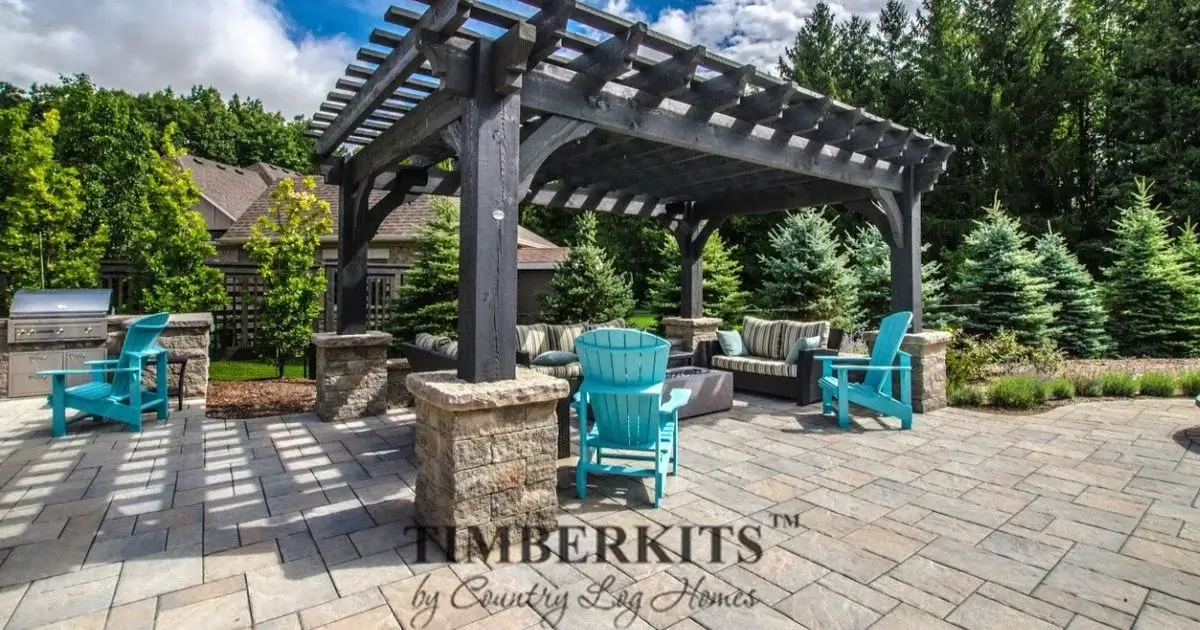
Walk past the pergola that's been sitting in a neighbour's yard for a few seasons, and you can usually tell what it's made of without getting close. The posts have gone slightly soft near the base where water pools. The stain has lifted in strips along the south-facing beam, the side that takes the most sun. Give the structure a push and it moves a little more than it should.
The difference between a heavy timber pergola or pavilion that's still standing straight after thirty years and one that's being disassembled after eight comes down to four things: wood species, joinery method, finish, and post base detail. Get all four right and the structure behaves like a building. Miss any one of them and you're back to shopping sooner than you planned.
The Species Decision Is Made Before Anything Else
For an outdoor timber structure in Canada, the species question isn't incredibly open. The freeze-thaw cycle that runs through Southern Ontario winters puts real mechanical stress on wood. The moisture moving in and out of the fibres as temperatures swing expands and contracts the cells, which causes checking, splitting at the grain, and progressive joint loosening in structures that weren't built to handle it.
Pressure-treated pine handles moisture through chemical preservative treatment, not through the wood's own density. It works for decks and fence posts where dimensional movement is managed by design. In any outdoor timber structure, where the joinery must stay tight across years of seasonal movement, it warps and twists as it dries, and those distortions transfer directly to the joints.
Douglas Fir behaves differently. The Canada Wood Group's species profile describes it as hard and resistant to abrasion, drying with small dimensional movement and little tendency to check. That's exactly what you need in a species where mortise and tenon joinery must stay tight through a Canadian winter. That low tendency to check isn't incidental.
It's the reason Douglas Fir shows up in glulam beams and roof trusses, not just pergolas. The Research confirms it as one of the finest timbers for heavy structural purposes. #1 Grade Douglas Fir holds stain differently too. The density means less uptake of moisture, which means less dimensional change between seasons.
A Douglas Fir structure dressed and brushed on all four sides isn't just smoother. The reduced surface roughness creates more uniform thickness across every piece in the structure, which is what lets precision-cut joints fit without site adjustment and stay fit.
Bolts Loosen. Wood-to-Wood Doesn't.
Most outdoor structures sold as pergolas use bolted or bracket-based connections. The bolt holds everything together mechanically, which works fine when the structure is new and the wood hasn't moved much. After a few seasons of expansion and contraction, the bolt holes elongate slightly, the brackets flex, and the connection loosens.
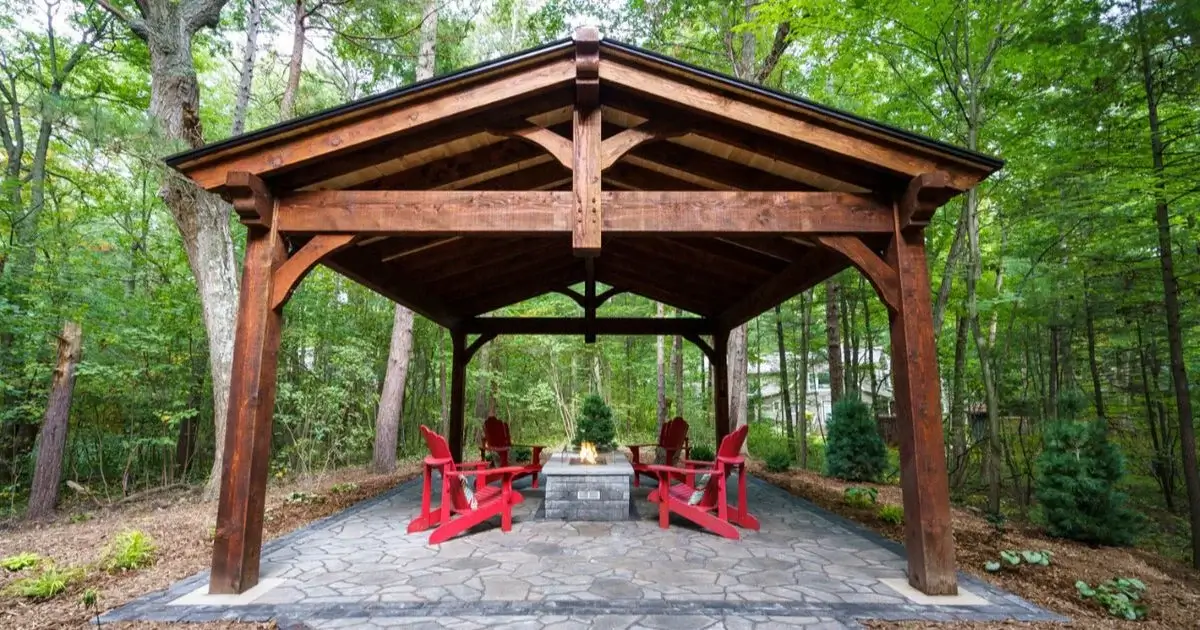
Mortise and tenon joinery works differently. The tenon, a projecting tongue of wood cut from one timber, fits into the mortise pocket cut into the receiving timber. The connection is wood-to-wood, with the mechanical load carried by the contact surface area of the joint rather than by a fastener in tension. As the wood moves seasonally, the joint shifts with it. There's no bolt hole to elongate, no bracket to fatigue.
When that joinery is CNC-machined, the tolerances are tight enough that the fit is consistent across the structure. That consistency matters when building high-end structures. A site builder can adjust on the fly — trim a tenon, re-cut a pocket, compensate for any variation in the timber. Our structures are precut and shipped.
If the tolerances aren't right at the machine, they won't be right on install day, and a loose joint from day one only gets looser. Precision here isn't aesthetic. It determines whether the joint stays snug under load or gradually works loose over years of freeze-thaw cycling, which is the main structural failure mode for outdoor timber structures in this climate.
Why the Finish Matters More Than Most People Think
Surface stains and paints form a film over the wood. The film looks uniform when it's new. After one or two winters of thermal movement, it cracks at the joints and along the grain, which lets water in under the film. From there, the water is trapped and the cycle of wetting and drying accelerates the checking and splitting it was supposed to prevent.
Penetrating oil finishes work from inside the timber. The oil carries into the cell structure rather than sitting on top of it, which means there's no surface film to crack. CUTEK Extreme protects this way, with cumulative applications building protection from within the wood outward. It won't flake because there is no surface layer. The oil is in the wood.
Colour is transparent with a penetrating finish, which means the result varies by wood density and natural colour. Two pieces of the same species can take the same stain slightly differently. That's not a defect. It's what stained natural timber looks like, as opposed to painted composite materials where everything comes out identical.
Over time, a well-maintained Douglas Fir structure with a good penetrating finish develops a patina that adds to the structure rather than looking like deterioration.
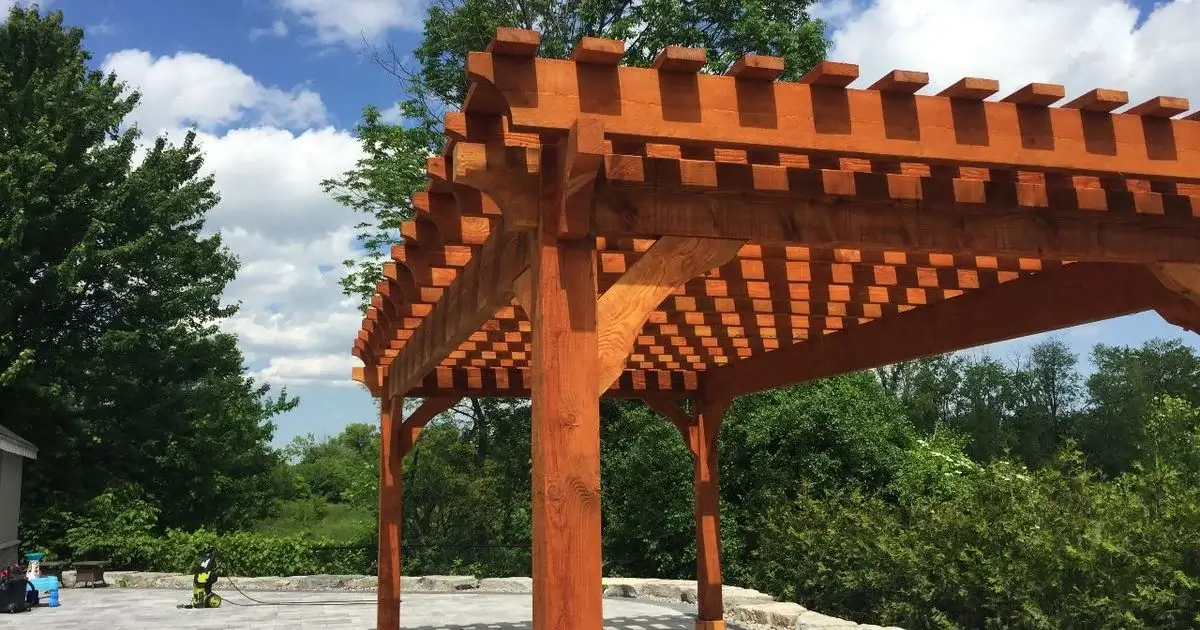
Where Structures Actually Fail First
The post base is where most outdoor timber structures fail first, and it's almost always the same failure mode: the post sits in direct contact with a surface where water can collect, the wood at the base gets chronically wet and dry, the finish breaks down at that point first, and rot works its way up from the bottom.
Good post base detail keeps the timber off the surface it's mounted to. A base plate holds the post above the concrete or decking, which means air circulates at the base, water drains away, and the end grain, the most moisture-absorbent face on any piece of lumber, isn't sitting in pooled water.
End grain wicks moisture faster than any other surface on the timber. Once rot establishes itself there, it moves up through the post from the inside, and there's no finish that stops it at that point. The fix is keeping the end grain dry in the first place, not treating it after the fact.
It's a simple detail with an outsized effect on timber frame pergola lifespan, and it's the kind of thing that gets skipped on mass-produced structures where the post often ships with a flat cut base and no elevation off the mounting surface.
The footing under the post matters too. A sono tube or engineered concrete slab provides a stable, level bearing surface that doesn't shift with freeze-thaw heave. Movement at the base transfers directly up through the posts and into the joinery. A stable footing keeps the structure in the alignment it was built to.
So How Long Does a Heavy Timber Structure Actually Last?
It depends on what it's made of and how it's maintained. A structure with bracket connections and a surface film finish might give ten to fifteen years in a Canadian climate before the joints are loose enough to matter and the finish has failed enough to let moisture in. At that point you're either replacing the structure or doing significant remedial work.
A Douglas Fir structure with mortise and tenon joinery, a penetrating oil finish, and proper post base detail behaves differently. The species is denser, the joinery doesn't rely on fasteners staying tight through wood movement, and the finish doesn't have a surface film to crack.
Well-built heavy timber structures with routine maintenance, cleaning, and a maintenance coat of stain every few years, post base inspection annually and can last well beyond a single generation. That maintenance isn't complicated. It's just consistent. The structure does most of the work.
TIMBERKITS™ structures ship pre-cut, pre-stained, with all hardware included. The mortise and tenon joints are CNC-machined before anything leaves the shop, so the pieces fit the way they were designed to fit. The Super Heavy Pergola specs and design options cover what that looks like structurally, and the commercial and residential gallery shows the range of what's been built.
Before the Season Books Up
The lead time is 4 to 6 weeks and runs longer in peak season. A structure that needs to be up by June has a window that closes faster than most people expect.
What helps coming in: a footprint dimension and a general sense of how the space will be used. Everything else gets worked out from there.
If the dimensions are already figured out, request a quote with your dimensions — the team can confirm material spec and timeline from there.